What ACA compliance reporting is
ACA compliance reporting is the annual process by which employers prove to the IRS that they offered health coverage as required under the Affordable Care Act. If you are an applicable large employer, you have to report what coverage you offered, to whom, and whether it met the affordability and minimum value standards.
Get it right and it is a routine filing. Get it wrong, or late, and the penalties add up quickly. This guide explains who has to report, which forms are involved, the deadlines, and how to make the whole thing manageable.
Who has to report
The core requirement applies to applicable large employers, generally those with 50 or more full time and full time equivalent employees during the prior year. If that is you, ACA reporting is mandatory regardless of whether you actually offered coverage.
Self insured employers of any size also have reporting obligations because they are treated as the coverage provider. If you are close to the 50 employee threshold, count carefully, because full time equivalents from part time staff can push you over even if your full time headcount is under 50.
The forms: 1094 and 1095
ACA reporting centers on two form families:
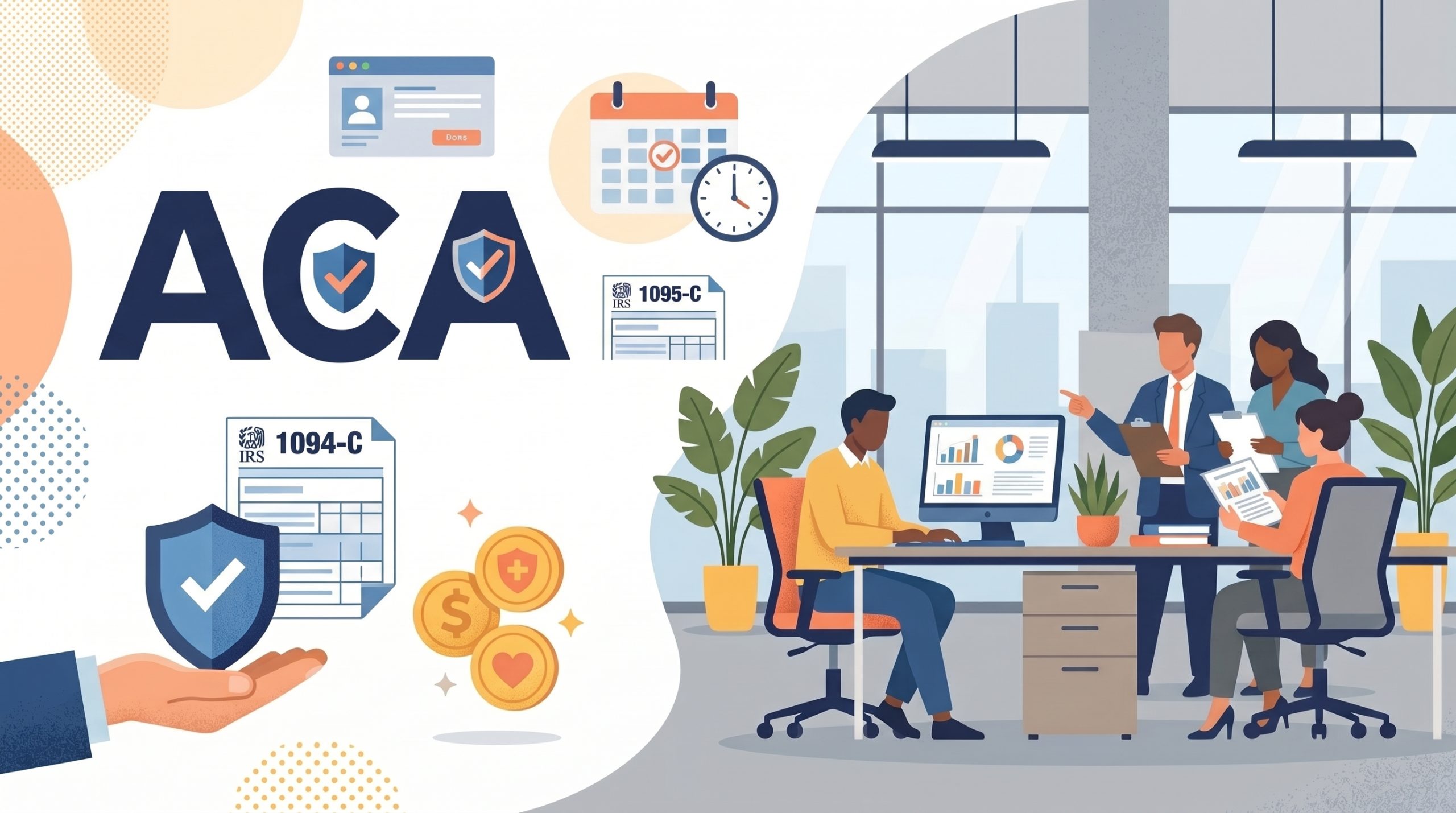
- Form 1095-C. One per full time employee, detailing the coverage you offered them each month and its cost. This is the form employees receive and the one that carries most of the detail.
- Form 1094-C. The transmittal that summarizes your 1095-C filings and reports company level information to the IRS.
Self insured plans use the 1095-B and 1094-B series to report actual enrollment. The 1095 forms are where accuracy matters most, because each code on each line describes a specific coverage situation, and the wrong code can trigger an inquiry.
The deadlines that matter
ACA reporting runs on an annual cycle tied to the prior calendar year:
- Furnish 1095 forms to employees by early March
- File with the IRS by late March if filing electronically
- Electronic filing is required for most employers, since the paper threshold is now very low
Exact dates shift slightly year to year, so confirm the current deadlines before each filing season. The practical point is that the work starts well before the deadline, because the data has to be assembled and checked first.
The penalties for getting it wrong
There are two penalty layers, and they stack:
- Reporting penalties. Failing to file, filing late, or filing with incorrect information carries a per return penalty that applies separately to the employee copy and the IRS copy, so a single mistake can be counted twice.
- Coverage penalties. Separately, if you did not offer adequate coverage to enough full time employees, the employer shared responsibility payment can run into the thousands of dollars per employee per year.
Because the reporting is how the IRS identifies coverage gaps, sloppy reporting can invite the far larger coverage penalties. Accuracy is not just about avoiding filing fines.
Why ACA reporting is hard to do by hand
The difficulty is not any single form. It is that accurate reporting depends on twelve months of clean data: who was full time each month, what was offered, what it cost, and who enrolled. That data lives across payroll, benefits, and time tracking. Pulling it together at year end, reconciling it, and translating it into the correct monthly codes is where employers lose days and make mistakes.
What ACA compliance reporting software should do
Good ACA reporting software works all year, not just in March:
- Tracks full time status monthly using your actual hours data, so the measurement is not a year end guess
- Generates the correct 1095 codes from coverage and affordability data rather than manual entry
- Validates before filing to catch missing or inconsistent data while there is still time to fix it
- E-files with the IRS and furnishes employee copies from one system
- Keeps records in case of an IRS inquiry or correction
Software versus a reporting service
Some employers want software they run themselves. Others prefer an ACA compliance reporting service that takes the data, produces the forms, files them, and stands behind the result. The service model appeals to lean HR teams and to any employer that would rather not own the penalty risk. The right answer depends on your internal capacity and how comfortable you are managing the codes.
How BenefitWerks handles ACA reporting
BenefitWerks tracks the coverage and eligibility data you need throughout the year and produces, validates, and files your 1094 and 1095 forms, so ACA reporting is not a year end scramble. Because it runs on the same platform as your benefits administration, the data is already clean when filing season arrives. To see how it would work for your organization, request a demo.