In today’s digital-first workplace, employee data is more connected—and more vulnerable—than ever before. Human resources teams manage a wealth of sensitive information daily, from Social Security numbers and health insurance details to medical history and dependent data. With this increased reliance on technology comes a heightened responsibility to protect that information under the Health Insurance Portability and Accountability Act (HIPAA).
HIPAA compliance isn’t just a box to check—it’s a critical component of maintaining employee trust and safeguarding your organization from costly breaches or penalties. As benefits administration continues to evolve through digital platforms, understanding how modern benefits software supports HIPAA compliance has become essential for HR professionals and brokers alike.
Understanding HIPAA in the Context of Benefits Administration
HIPAA was enacted to protect individuals’ medical information and ensure that health data is handled securely. For employers and HR teams, this means that any system used to manage employee benefits must adhere to strict privacy and security standards.
In benefits administration, HIPAA compliance applies to the collection, storage, and transmission of protected health information (PHI). This includes details such as medical plan enrollments, claims data, and any information that can identify an individual in connection with their health coverage.
Noncompliance can lead to severe consequences, including financial penalties, reputational damage, and loss of employee confidence. That’s why many organizations are turning to modern benefits software that’s specifically designed to meet HIPAA’s requirements while simplifying day-to-day HR operations.
The Risks of Outdated or Manual Systems
Before the rise of digital benefits platforms, many HR departments relied on spreadsheets, paper forms, and email to manage benefits data. While these methods may have worked in the past, they now pose significant security risks. Paper files can be misplaced or stolen, and unencrypted emails can easily expose sensitive information.
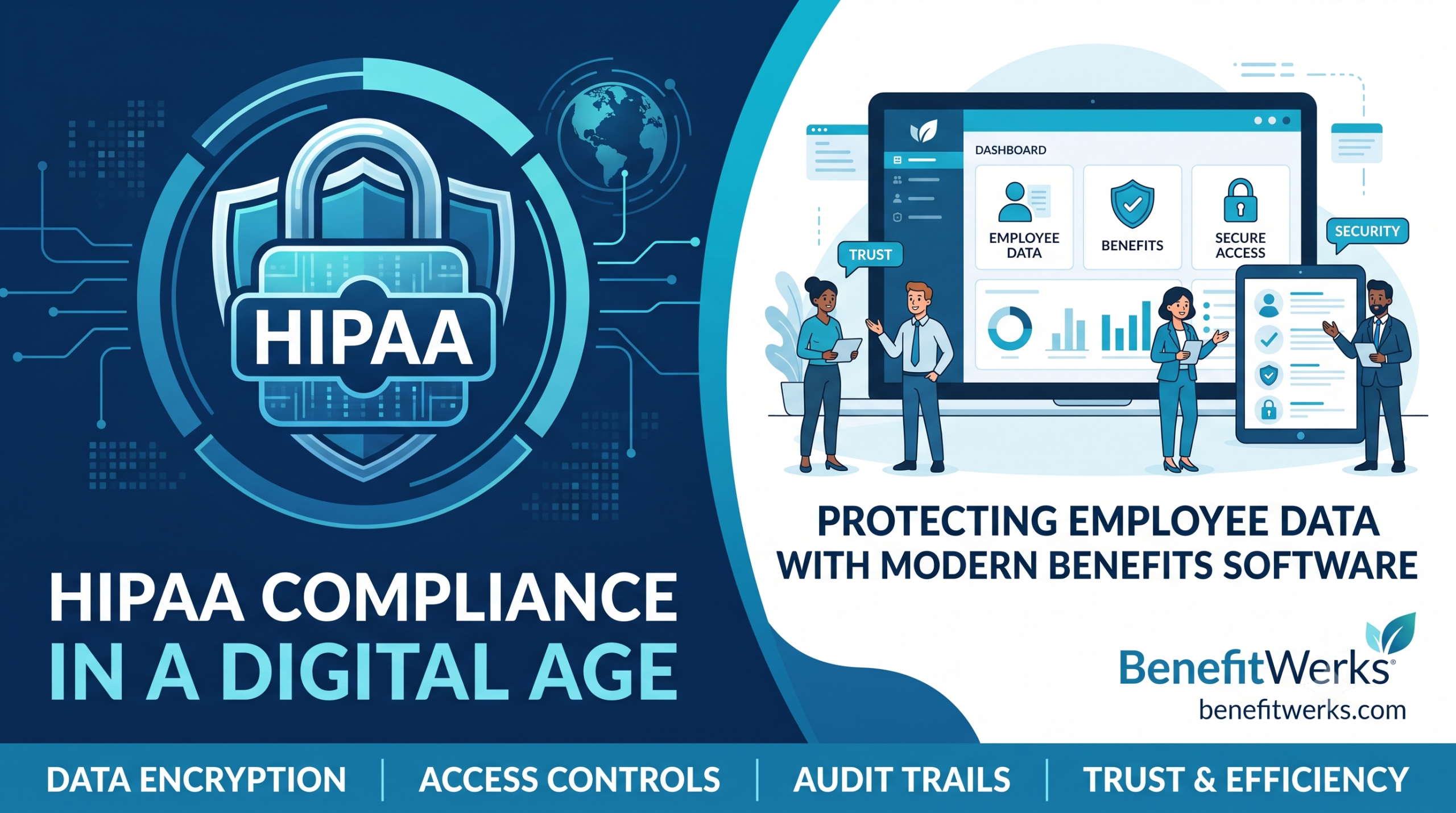
Even some older digital systems fall short of today’s compliance standards. Without proper encryption, access controls, and audit trails, these systems can leave organizations vulnerable to data breaches. In a world where cyber threats continue to grow more sophisticated, relying on outdated tools is no longer an option.
How Modern Benefits Software Supports HIPAA Compliance
Modern benefits administration platforms are built with compliance and security at their core. By automating key processes and incorporating advanced security measures, these systems help HR teams maintain compliance without adding unnecessary complexity.
Data Encryption and Secure Transmission
Encryption ensures that employee data remains protected both in transit and at rest. When information is exchanged between employers, carriers, and third-party administrators, secure data transfer protocols such as Electronic Data Interchange (EDI) are used to prevent unauthorized access.
Role-Based Access Controls
Not every employee needs access to all data. Modern platforms allow HR administrators to assign specific access levels based on job roles. This minimizes the risk of internal data exposure and ensures that only authorized personnel can view or modify sensitive information.
Audit Trails and Monitoring
HIPAA requires organizations to maintain detailed records of who accesses PHI and when. Modern benefits software automatically logs this activity, providing a complete audit trail that can be used for compliance reporting or investigations if needed.
Automatic Updates and Compliance Maintenance
Regulations evolve, and keeping up with changes can be challenging. With cloud-based benefits platforms, updates are applied automatically to maintain compliance with the latest HIPAA and data security standards. This ensures that your organization is always protected without the need for manual oversight.
Secure Employee Self-Service
Self-service portals allow employees to manage their benefits independently, but they must be designed with security in mind. Modern systems use multi-factor authentication and secure logins to protect personal information while providing convenient access for employees.
Building Trust Through Secure Benefits Administration
Data security isn’t just about compliance—it’s about trust. Employees expect their employers to safeguard their personal information, especially when it comes to health-related data. By using a modern, HIPAA-compliant benefits platform, organizations demonstrate their commitment to protecting employee privacy and maintaining transparency in how data is managed.
At BenefitWerks, we understand that compliance and convenience must go hand in hand. Our technology integrates secure data management, automated compliance features, and user-friendly tools to help HR teams manage benefits efficiently while maintaining the highest standards of data protection.
In the digital age, HIPAA compliance isn’t optional—it’s essential. With the right benefits software, businesses can stay compliant, reduce administrative risk, and give employees the confidence that their personal information is safe. Protecting data isn’t just good practice—it’s a cornerstone of modern HR excellence.