For brokers, managing client benefits programs is about more than just selecting plans—it’s about delivering a seamless experience from implementation to ongoing administration. Yet, many brokers still juggle multiple systems, spreadsheets, and manual processes when onboarding new clients. This fragmented approach can lead to inefficiencies, errors, and frustration for both brokers and their clients.
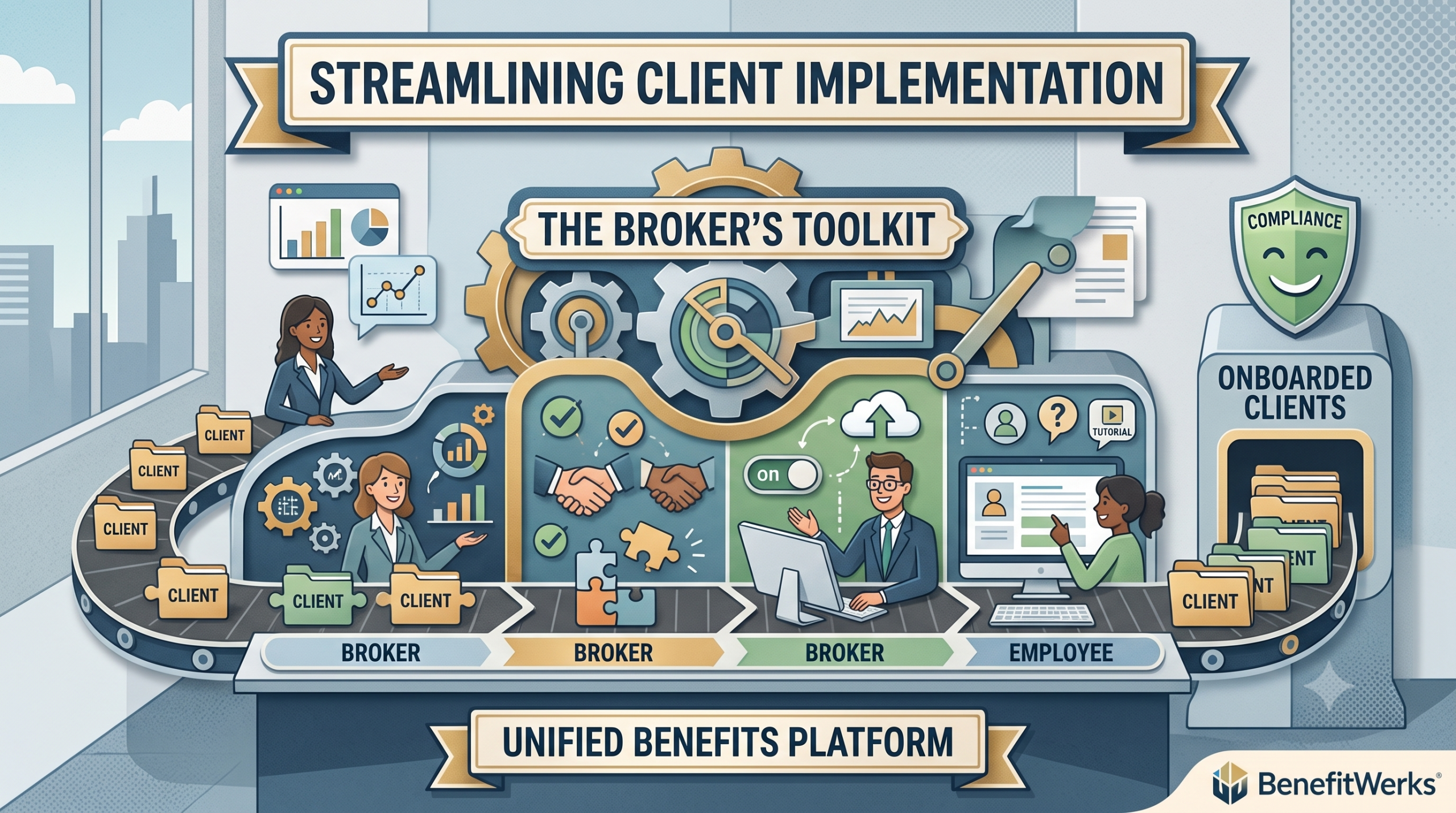
That’s where a unified benefits administration platform comes in. By consolidating key functions like enrollment, data management, and carrier communication into one system, brokers can streamline client implementation, improve accuracy, and deliver a higher level of service.
Here’s how a unified benefits platform can transform the way brokers manage client relationships and simplify every step of the implementation process.
Simplifying the Onboarding Process
Client implementation is one of the most critical phases of benefits administration. It’s the foundation for everything that follows—if the setup isn’t done correctly, it can lead to ongoing issues with eligibility, billing, and compliance.
A unified benefits platform simplifies onboarding by centralizing all client data in one place. Instead of collecting information through multiple channels and re-entering it into different systems, brokers can upload and manage everything through a single interface. This not only saves time but also reduces the risk of data entry errors.
With automated workflows, brokers can easily track progress, assign tasks, and ensure that every step of the implementation process is completed on schedule. The result is a smoother, faster onboarding experience for both the broker and the client.
Enhancing Data Accuracy and Compliance
Accuracy is everything in benefits administration. Small errors—like an incorrect Social Security number or coverage date—can lead to big problems with carriers and compliance. A unified benefits platform ensures that all data is consistent across systems by eliminating duplicate entry points.
When employee information is entered once and automatically shared with carriers, payroll providers, and HR systems, the chances of discrepancies drop dramatically. This not only improves accuracy but also helps maintain compliance with regulations such as the Affordable Care Act (ACA).
Automated reporting tools can also help brokers stay on top of compliance requirements by generating real-time reports and alerts for potential issues. With accurate data and built-in compliance tracking, brokers can focus more on advising clients and less on troubleshooting administrative errors.
Streamlining Carrier Connections
Managing multiple carrier relationships can be one of the most time-consuming aspects of benefits administration. Each carrier has its own processes, file formats, and timelines, which can make implementation complex and prone to delays.
A unified benefits platform bridges the gap by using Electronic Data Interchange (EDI) to automate data exchange between clients and carriers. This means enrollment changes, terminations, and updates flow directly to carriers without manual intervention.
For brokers, this automation translates into fewer errors, faster processing times, and more satisfied clients. It also frees up time to focus on strategic consulting rather than administrative follow-up.
Delivering a Better Client Experience
Clients expect efficiency, transparency, and results. A unified platform helps brokers deliver all three. With real-time access to enrollment data, reporting dashboards, and communication tools, brokers can provide clients with the visibility they need to understand their benefits programs.
When clients can easily track progress, view enrollment metrics, and access support through a single platform, it builds trust and strengthens the broker-client relationship. It also positions the broker as a true partner—someone who not only provides great benefits options but also ensures a seamless experience from start to finish.
Empowering Brokers with Scalability
As brokers grow their book of business, scalability becomes essential. Managing multiple clients manually can quickly become unmanageable, especially during busy enrollment seasons. A unified benefits platform provides the flexibility and scalability needed to handle increased demand without sacrificing quality or accuracy.
By automating repetitive tasks and centralizing data management, brokers can onboard new clients more efficiently and maintain consistent service levels across their entire portfolio. This scalability allows brokers to focus on growth and client retention rather than administrative bottlenecks.
The Future of Benefits Administration
In today’s competitive benefits landscape, brokers need more than just great products—they need great technology. A unified benefits platform is the foundation of a modern broker toolkit, helping streamline implementation, reduce administrative burden, and enhance client satisfaction.
At BenefitWerks, we understand the challenges brokers face when managing complex benefits programs. Our integrated platform is designed to simplify every step of the process, from implementation to ongoing support, allowing brokers to deliver smarter, faster, and more efficient solutions for their clients.
By embracing a unified benefits platform, brokers can transform the way they work—turning complicated processes into seamless experiences and setting a new standard for service in the benefits industry.